概述
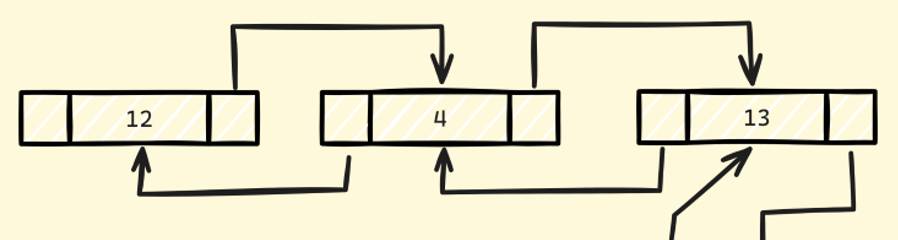
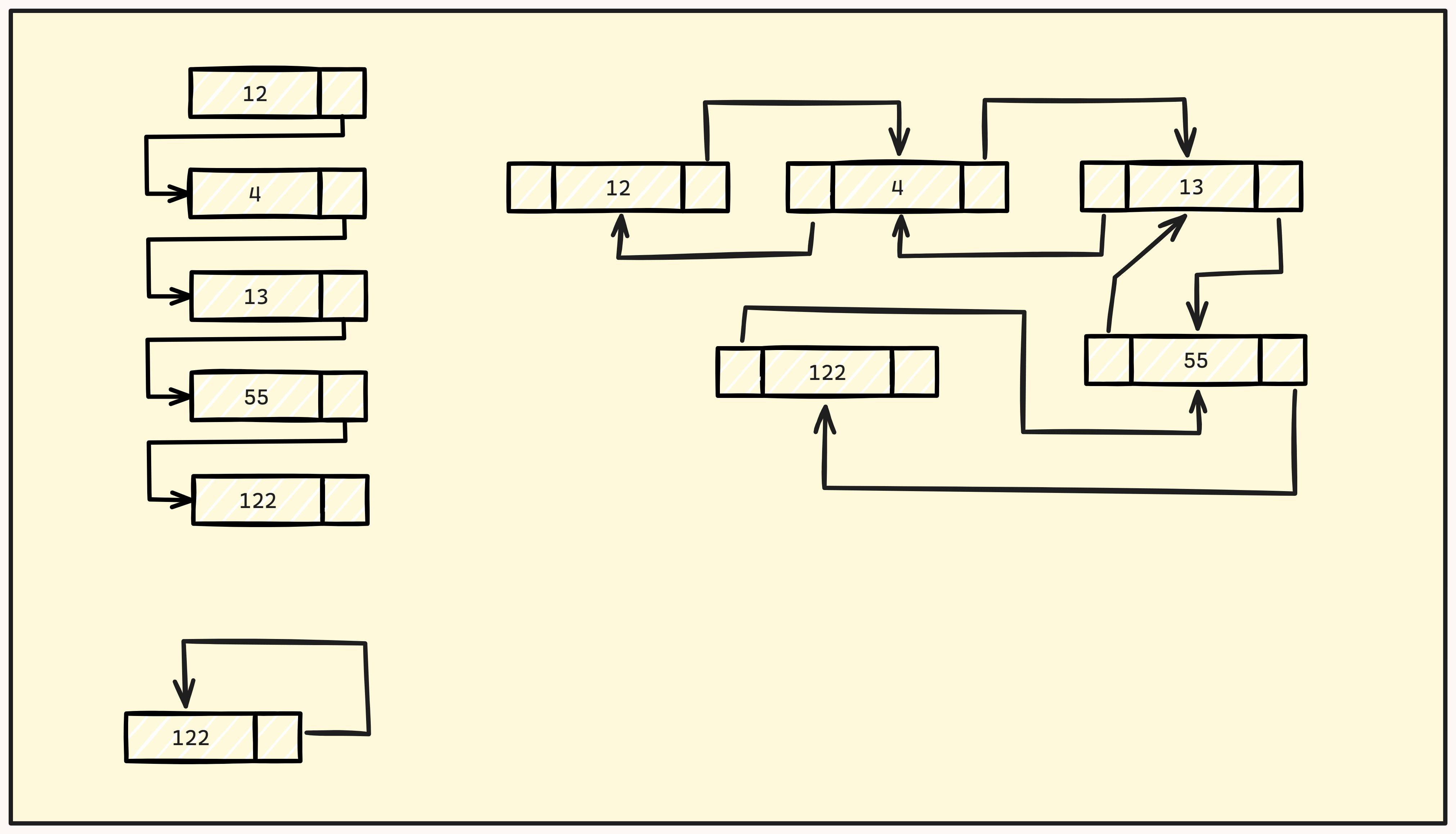
由一系列 节点 通过指针连接在一起形成的线性结构,称为 链表
简单图示(C++)
特性
- 随机存储 —— 存储空间不一定连续:链表在内存中不是连续分布,分配机制取决于操作系统的内存管理,资源申请方面一般是先申请节点资源,通过指针把各个结点串成链表,资源释放方面也是以结点为单位
- 不定长:由于结构相比数组较为松散,以节点为单位来管理资源,因此链表长度灵活,增删方便
链表种类
- 单链表(一个指针,指向后一个结点)
- 双链表(两个指针,分别指向前一个结点和后一个结点)
- 循环链表(最后结点的指针指向开头结点)
- …
实现(C++)
1
2
3
4
5
6
7
8
9
10
11
12
13
14
15
16
17
18
19
20
21
22
23
24
25
26
27
28
29
30
31
32
33
34
35
36
37
38
39
40
41
42
43
44
45
46
47
48
49
50
51
52
53
54
55
56
57
58
59
60
61
62
63
64
65
| struct Node {
int data;
Node* next;
Node(int dat, Node* nxt = nullptr) : data(dat), next(nxt) {}
};
class List {
public:
List() : virtualHead_(new Node(-1)), size_(0) {}
~List() {
Node* cur = virtualHead_->next;
while (cur != nullptr) {
Node* tmp = cur;
cur = cur->next;
delete tmp;
--size_;
}
delete virtualHead_;
}
void insert(int data, int index = 0) {
if (index < 0 || index > size_) return;
Node* preNode = indexToNode(index - 1);
Node* newNode = new Node(data, preNode->next);
preNode->next = newNode;
++size_;
}
void erase(int index) {
if (index < 0 || index >= size_) return;
Node* preNode = indexToNode(index - 1);
Node* cur = indexToNode(index);
if (cur == nullptr) return;
preNode->next = cur->next;
delete cur;
--size_;
}
int data(int index) {
Node* cur = indexToNode(index);
if (cur) return cur->data;
return -1;
}
int size() {
return size_;
}
private:
Node* indexToNode(int index) {
Node* node = virtualHead_;
if (index < 0 || index > size_) return node;
int cnt = 0;
while (node != nullptr && cnt <= index) {
node = node->next;
++cnt;
}
return node;
}
private:
Node* virtualHead_ = nullptr;
int size_;
};
|
复杂度分析(部分操作)
| 操作 |
时间复杂度 |
| 访问/查找元素 |
O(n) |
| 插入数据 |
O(1) |
| 删除数据 |
O(1) |
| 扩容 |
O(1) |
发散/随想/自身理解(?)
- 链表是线性的,在检索数据方面较慢,需要从头结点开始遍历找到目标结点; 但长度很灵活,增删方面比数组优
- 相比数组,需要额外存储指针结构
介绍链表不如说是介绍链表的节点结构,这个在我看来才是主角,链表是节点的一种组织形式- 虚头节点,便于管理链表增删,视情况添加